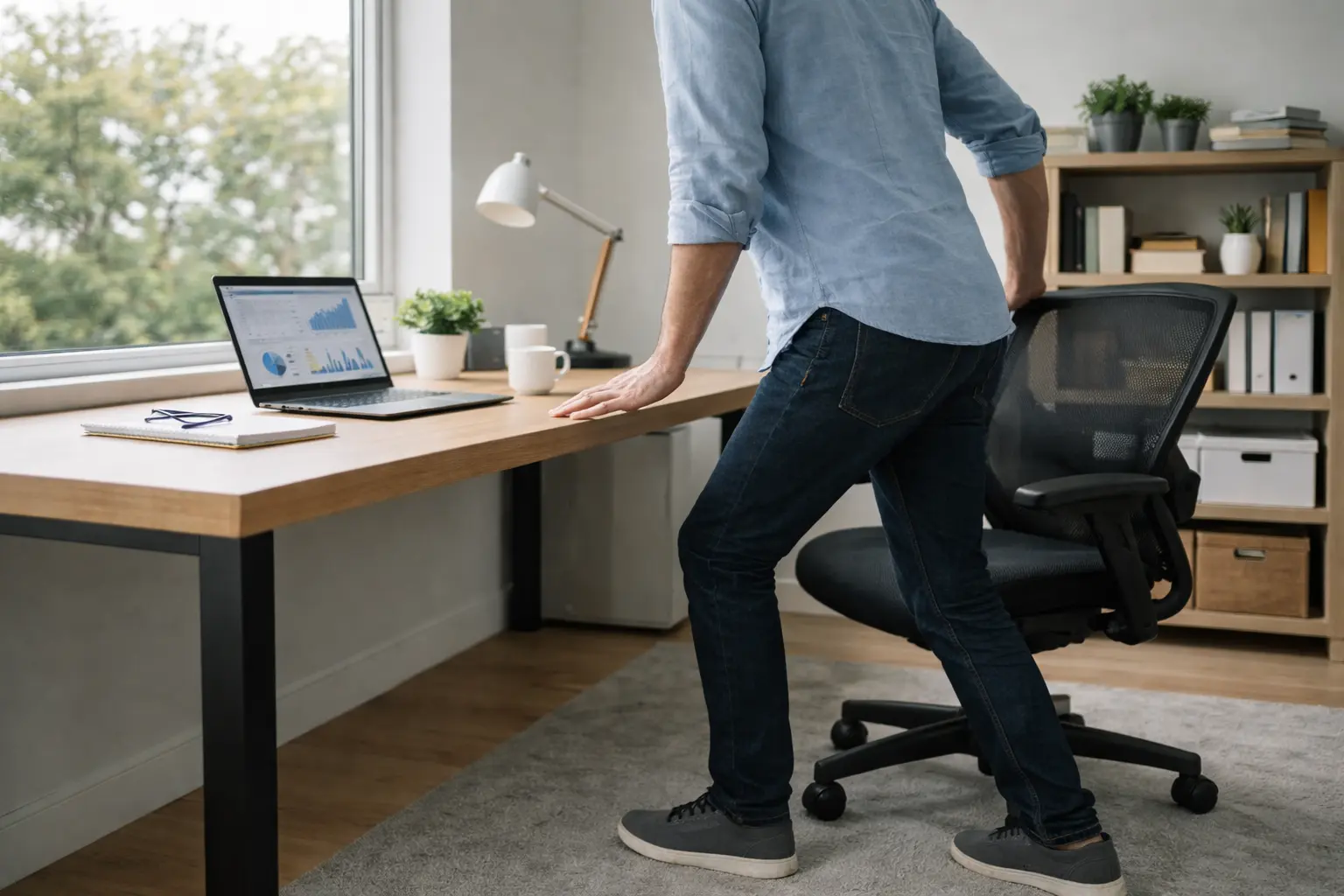
5 Essential Posture Tips for Remote Workers
Working from home? Learn how to maintain good posture and prevent back pain with these practical tips.
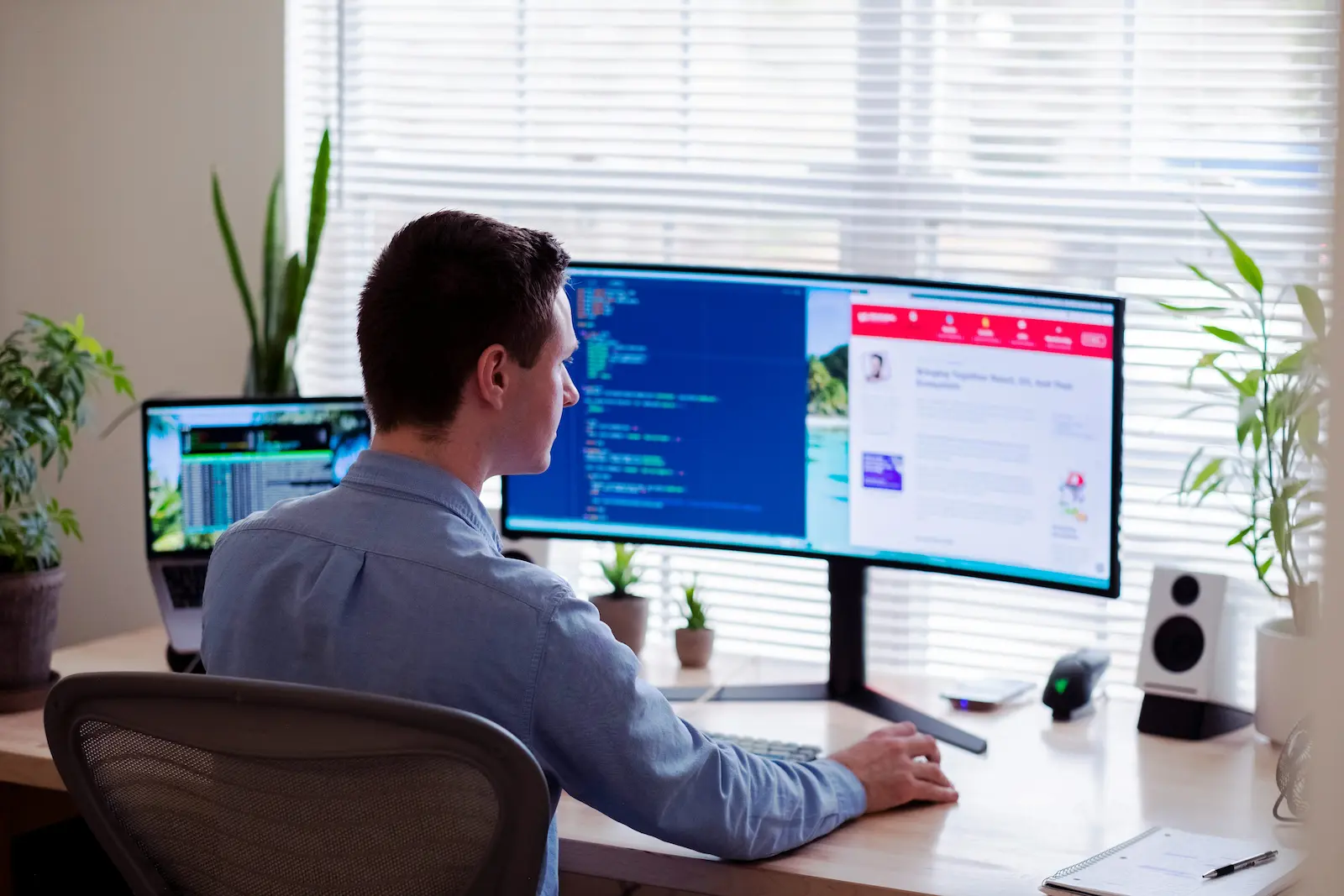
The shift to remote work has brought many benefits—flexibility, comfort, and the ability to design your own workspace. But it has also created a growing issue: poor posture and the aches, stiffness, and fatigue that come with it.
Most home setups weren’t designed for long hours of computer work. Sofas, beds, and kitchen tables offer convenience, not ergonomics. Over time, these small compromises add up.
If you’re feeling neck tension, back soreness, or general discomfort, you’re not alone. Here are five science-backed posture tips to help you stay healthy and comfortable while working remotely.
1. Set Up Your Screen at Eye Level
The Problem: When your screen sits too low—as is common with laptops—you’re forced to tilt your head downward. This posture increases stress on the neck and upper back and often leads to what’s known as “tech neck.”
The Fix:
- Raise your laptop using a stand, stack of books, or a box
- Use an external keyboard and mouse
- Position the top of your screen at or slightly below eye level
- Keep the screen at arm’s length
Why It Matters: For every inch your head tilts forward, your neck bears roughly 10 extra pounds of pressure. Correct screen height helps keep your head aligned naturally over your spine — greatly reducing strain.
2. Support Your Lower Back
The Problem: Most household chairs lack proper lumbar support. When the lower back collapses into a C-shape, pressure increases on the spinal discs and encourages slouching.
The Fix:
- Choose a chair with built-in lumbar support—or add a pillow
- Keep both feet flat on the floor
- Maintain a 90-degree angle at the hips and knees
- Avoid crossing your legs for long periods
Quick Tip: A rolled-up towel placed in the curve of your lower back can provide instant support and encourage a neutral spine posture.
3. Take Frequent Movement Breaks
The Problem: Even with perfect posture, staying still for long periods is harmful. Static sitting reduces circulation, stiffens muscles, and increases fatigue.
The Fix:
- Stand and move every 30–60 minutes
- Incorporate simple stretches during breaks
- Try a sit-stand desk if possible
- Take walking calls or walk briefly after meetings
Why Breaks Help: Research consistently shows that short, frequent movement breaks reduce discomfort and improve focus far more effectively than occasional long breaks.
4. Strengthen Your Core
The Problem: A weak core makes it difficult to maintain upright posture. Without strong support from the abdominal and lower back muscles, your spine takes on extra workload, often leading to pain.
The Fix:
- Add core exercises to your weekly routine (planks, bird dogs, dead bugs)
- Strengthen both the front and backside of your core
- Aim for brief, consistent sessions rather than long workouts
Simple Exercise: While seated, gently tense your abdominal muscles—as if preparing for someone to tap your stomach. Hold for 10 seconds and release. Repeat throughout the day to build awareness and stability.
5. Relax and Reposition Your Shoulders
The Problem: During concentration or stress, many people unconsciously lift their shoulders toward their ears, tightening the neck and upper back.
The Fix:
- Check in with your shoulders periodically
- Roll them back and down
- Keep elbows close to your body
- Adjust your keyboard height to avoid reaching
Quick Test: If you can’t easily slide your hand between your shoulder and your ear, your shoulders are likely elevated. Resetting them helps relieve tension immediately.
Building New Posture Habits
Knowing what to do is easy—remembering to do it consistently is the challenge.
When you’re immersed in work, hours can pass unnoticed. Small posture errors accumulate silently: a sunken lower back, a tilted head, rounded shoulders. Over time, these patterns become habits.
Creating gentle reminders to stretch, reset your position, or simply breathe can make posture awareness effortless.
The Long-Term Benefits
Improving posture has powerful, wide-ranging effects:
- Less pain: Reduced neck, shoulder, and lower back strain
- More energy: Better alignment improves breathing and circulation
- Improved focus: A comfortable body supports a focused mind
- Greater confidence: Upright posture influences mood and presence
Posture isn’t about perfection — it’s about awareness and consistency.
Start by making one small adjustment today. Then build from there. Your body will notice the difference long before you realize the habit has changed.
Want more tips like this?
We’re sharing practical insights on ergonomics, digital wellbeing, and healthy work habits — with more guides coming soon.